I suspect that behind many a strong performer stands a quieter achiever.
Of course there are always exceptions to the rule and, as a former youth worker, I have examples aplenty of kids who have shone through adversity. Like the siblings I worked with whose mum would crash land up the car park of the community centre every Wednesday at pickup, pissed I dare say. The most divine-hearted young man and his younger sister (so I knew their mum was doing something right), they declared one afternoon that they couldn’t possibly partake of our usual group snack because “Mum’s making hotdogs tonight”! I longed to take them home and pop them on the mantelpiece to keep them safe, preserve the fragile sweetness I feared the harshness of life might sour. Like the doe-eyed girl with an exotic name who turned up one morning to school with a shiner because her drug-dealing father had hit her. He used to beat her mother till she was bloody and blue. He reminded me of Dustin Hoffman. She got out of that house and made a better life for herself. I know because I still see her around and many others like her.
Sometimes I come home and have a quiet cry. Tears of joy, with accents of wonder and, I admit, pride. A strategic intervention at the right time, small in the scheme of things, can bump a kid onto another, far healthier, more bountiful trajectory. Tiny nudge, immense, immeasurable outcome.
I reckon Malcolm Turnball, imagining his absent mother’s response to his achievements, still silently repeats “Look Mum, no hands”!
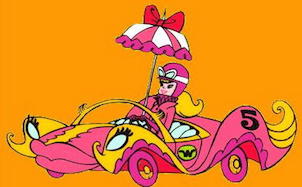
The point I want to make though is a different one. Like many parents of school-aged kids, my partner and I feel like we spend most of the weekend, especially now footy season is upon us, in a real-life episode of Wacky Races, only with sports-based destinations in mind. As a one-car family, this means things can get pretty chaotic, as arguments ensue over who needs the car more (versus who can walk or catch the bus), where to go, who’s responsible for what (organising fundraising raffles tickets and oranges for the footy team, notifying grandparents about venues, pleading with grandparents to take one kid whilst the other one plays or to borrow the car)…and on it goes.
As I made a roaring pitstop into my daughter’s dance school a few weeks back, watching in exasperation as she fumbled to find the elusive ballet shoes at the bottom of her bag, one of the other mums, also rushing, looked at me wearily and before she could speak I said, “I know, I feel the same, it’s tiring isn’t it, but I console myself that it’s time-limited and I’ll be complaining one day when the kids have set flight that I’m bored and sad and terribly lonely”. She nodded and replied, somewhat incredulously, “I’ve just spent all day charging up and down the highway, dropping off and picking up ”. Same race. Different car.
I’m pleased and grateful my kids are physically active and was flabbergasted, perhaps naïvely, when I recently heard the sports teacher of a well-regarded school talk of a decline in sports participation. With so much choice available, I just assumed kids were taking up the opportunities. Not necessarily so. We reflected on the competing element we all profess to hate but secretly find occasional relief in. Computers and devices. A world where kids not only choose their own content, but the pace at which the content is consumed. The teacher’s view was that actual sport simply doesn’t deliver the thrill that fast-paced virtual games offer: In short, it’s boring by comparison. I wondered whether kids are spending so much time online that it’s mentally fatiguing, leaving them with less energy to participate in physical pastimes.
But in the words of Mr. Keating (O Captain! My Captain!):
Sport is actually a chance for us to have other human beings push us to excel.
Dead Poets Society
One must admit that it is not often in life we’re afforded the privilege of kicking such clearly defined and celebrated goals. Sport allows us to do just this. Gold.
I often think my insistence that my kids honour their sporting and other extracurricular commitments – unless they’re sick, they go, we’ve paid for it, do it for the team – is a tad defensive given my own slacker ways. I admit I was the original piker as a youngster when it came to sport. I dabbled in a bit of tennis and even softball. I’m not a bad swimmer and did squad. But when I turned 16 and faced the prospect of training with pimply boys for Southern Zone, who would see me in my bathers no less, I didn’t even have the heart to offer a pathetic excuse, I just plain retreated.
Actually, I’m feeling rather shy and uncomfortable about having to flash my less-than-perfect thighs in front of the boys and I really don’t like shaving because it makes me itchy for a week.
Are you kidding me? There was no way I was ever going to have that conversation with Mr. R, lovely though he was. Or even my mum. My preferred excuse, and I got a long way on it, was simply that I couldn’t possibly get my head of out my book, whichever one that happened to be (there was always one), dork that I am. Only I know that, deep down, I was avoiding facing some fears.
This time round I can see there were lessons I missed out on, or had to learn another, possibly harder, way. Sporting arenas are microscosms of our competitive and consumerist society where kids get to rehearse a whole range of invaluable skills, attitudes and behaviours. A sample of life lessons might include: an understanding that a good team relies on the efforts of every player; the importance of reliability and being on time; how to get back up after getting knocked down, sometimes literally; coping with disappointments and losses; winning graciously; offering encouragement, praise and support to others; standing up to cheats and dirty players; the value of perseverance and having a positive mindset; and a personal favourite, learning to play though pain; even better – recognising that pain is not always an enemy. Now how’s that for a life mantra?
Two things my son has recently learned: 1. The tallest kid on the team, whilst definitely intimidating, is not necessarily the most threatening opponent; and 2. It’s better to try and lose than to not try and lose, because the throwing of an opportunity, never to be regained, is achingly dispiriting. I would add that the most expensive tennis shoes do not the best tennis player make. And, parents, I implore you, “Stay out of team politics”. Because once those kids are out on the field/court, it doesn’t matter a damn what we’ve been sniggering about – it ceases to be relevant.
I’ve had enlightening conversations with a friend of mine, who played netball at state level and is still a specimen of an athlete (ultra competitive to the end, she picked up tennis in five minutes flat, SHOW OFF), about the relationship between sport and identity. Sport is her centre, the court a stage where she feels masterful and at her best. Uncomplicated joy. More than that, it’s through sport that she’s forged enduring social networks, friendships that have sustained her through times good and bad. If she drifts away from sport, as she’s tried a few times, she feels adrift personally, loses her way.
Injuries aside, I love watching my son’s footy team play, partly from a group dynamic perspective, but mostly because the kids play with such big hearts, such courage and tenacity. I’ve observed that to be “on the team” grants automatic belonging. It’s tribal. It’s primal. It can be breathtakingly brutal. Win or lose, my son floats home most weeks on a magic carpet, high on a mix of testosterone, endorphins and the thrill of the chase. With his teammates, he’s gone a-hunting and survived in a contest for the ball. They’ve done it together. They feel part of something bigger than themselves.
But if I’ve got a few fears when it comes to sport, I also have a few concerns. On the one hand, I want to provide my children with chances to explore their strengths and passions. But I also feel pressured in the parenting stakes. I’ve recently taken to saying to my partner: “I wish I believed in reincarnation because I’d be a lot karma! Ha ha, get it”? He looks at me like I’m bonkers, of course, but what I mean is that I don’t want to stuff it up. Parenting, that is. My kids, that is. There’s just so much to do, with so many choices and so little time. What if I get it wrong and miss something out in the precious, formative moments of their lives? Existential nausea.
Part of me lives in permanent fear that I simply can’t live up to the standard of parenting itself being a super sport.
And what about when our kids are in danger of becoming narcissistic extensions of ourselves? The means to our own unfulfilled desires, dreams, potential? What I know is that the kid who shines on the court, or on stage, has usually had a lot of help. Someone has been an enabler. Think Andre Agassi and his father, Emmanuel (“Mike”). Think Tiger Woods and his dad, Earl. The Williams sisters, Serena and Venus, and Richard. The same applies with art and music. There’s been exposure and investment. On a more benign scale, the AFL is a testament to how prowess is handed down. You want names? Ablett. Liberatore. Langford. Daniher. Moore. Silvagni. And that’s just currently. There’s no denying that en masse, kids are being exposed to pressurised environments earlier. Coaching is more professional, training more intense, kids pick up the techniques with such alacrity. I’m in awe at how well some very young kids can dance or sing or hit a ball. I realise they’ve worked hard for it. Yet the line between wanting the best for one’s children and vicariously living through them can be fine indeed.
At half-time at a recent kids’ footy match, I overheard an opponent’s father swear so viciously at his son for alleged underperformance, that the team’s own trainer stepped in and ordered said dad to BACK OFF. I’m also disconcerted when I see kids doing carefully modeled or what I call “stylised” fist pumps in response to winning shots, goals or other stunts, all the while making furtive glances at Dad/Mum/Other Adult that seek reassurance about doing a good job. Or maybe that’s reassurance about being a good kid? There’s a difference. But I’m not confident that as parents we always make the distinction.
And how about this? What if we’re all running around exposing our kids to the same things, so that we’re not only all ragged, but end up producing a future set of drones who do and think alike? Everyone’s really great at heaps of stuff, but it’s all the same stuff. Children need to play to explore the boundaries of themselves and the world. In order to experience their unique capacities, to distill creativity, they also need to be bored. Sometimes really bored. And they need to rest. For their minds to wander and wonder and make connections at leisure, as brains are apt to do. An old and clever friend, a philosopher who did his PhD at Cornell University, has the same concerns about education: that we’re pumping out students so versed in particular theories, ideas and modes of writing that it precludes room for novel thought and innovation, surely necessary in a whole range of areas, from IT to social action.
It turns out global warming helped me fashion a more nuanced perspective. Footy season started. It was 35 degrees on training night week after week. When my son, delicate orchid that he is, protested that “It’s too hot for training”, I announced resolutely, “You do a lot for that footy team, but there’s no way I’m prepared to let you pickle your brain for it”. And that was that. He missed nearly a whole term of training. It felt fine. New, in an old kind of way, but fine. Because it was fine. My inner slacker needed to be cut some slack. For both our sakes. Footy season rolls on. And it’s my turn to do the oranges!
 The Accidental Therapist