Behind Many a Great Kid Stands a Strong and Possibly Exhausted Parent!

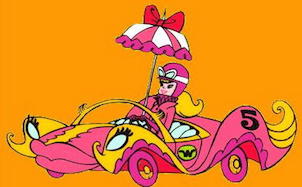
Penelope Pitstop

I suspect that behind many a strong performer stands a quieter achiever.

Of course there are always exceptions to the rule and, as a former youth worker, I have examples aplenty of kids who have shone through adversity. Like the siblings I worked with whose mum would crash land up the car park of the community centre every Wednesday at pickup, pissed I dare say. The most divine-hearted young man and his younger sister (so I knew their mum was doing something right), they declared one afternoon that they couldn’t possibly partake of our usual group snack because “Mum’s making hotdogs tonight”! I longed to take them home and pop them on the mantelpiece to keep them safe, preserve the fragile sweetness I feared the harshness of life might sour. Like the doe-eyed girl with an exotic name who turned up one morning to school with a shiner because her drug-dealing father had hit her. He used to beat her mother till she was bloody and blue. He reminded me of Dustin Hoffman. She got out of that house and made a better life for herself. I know because I still see her around and many others like her.

Sometimes I come home and have a quiet cry. Tears of joy, with accents of wonder and, I admit, pride. A strategic intervention at the right time, small in the scheme of things, can bump a kid onto another, far healthier, more bountiful trajectory. Tiny nudge, immense, immeasurable outcome.

I reckon Malcolm Turnball, imagining his absent mother’s response to his achievements, still silently repeats “Look Mum, no hands”!

The point I want to make though is a different one. Like many parents of school-aged kids, my partner and I feel like we spend most of the weekend, especially now footy season is upon us, in a real-life episode of Wacky Races, only with sports-based destinations in mind. As a one-car family, this means things can get pretty chaotic, as arguments ensue over who needs the car more (versus who can walk or catch the bus), where to go, who’s responsible for what (organising fundraising raffles tickets and oranges for the footy team, notifying grandparents about venues, pleading with grandparents to take one kid whilst the other one plays or to borrow the car)…and on it goes.

As I made a roaring pitstop into my daughter’s dance school a few weeks back, watching in exasperation as she fumbled to find the elusive ballet shoes at the bottom of her bag, one of the other mums, also rushing, looked at me wearily and before she could speak I said, “I know, I feel the same, it’s tiring isn’t it, but I console myself that it’s time-limited and I’ll be complaining one day when the kids have set flight that I’m bored and sad and terribly lonely”. She nodded and replied, somewhat incredulously, “I’ve just spent all day charging up and down the highway, dropping off and picking up ”. Same race. Different car.

I’m pleased and grateful my kids are physically active and was flabbergasted, perhaps naïvely, when I recently heard the sports teacher of a well-regarded school talk of a decline in sports participation. With so much choice available, I just assumed kids were taking up the opportunities. Not necessarily so. We reflected on the competing element we all profess to hate but secretly find occasional relief in. Computers and devices. A world where kids not only choose their own content, but the pace at which the content is consumed. The teacher’s view was that actual sport simply doesn’t deliver the thrill that fast-paced virtual games offer: In short, it’s boring by comparison. I wondered whether kids are spending so much time online that it’s mentally fatiguing, leaving them with less energy to participate in physical pastimes.

But in the words of Mr. Keating (O Captain! My Captain!):

Sport is actually a chance for us to have other human beings push us to excel.

                                Dead Poets Society

One must admit that it is not often in life we’re afforded the privilege of kicking such clearly defined and celebrated goals. Sport allows us to do just this. Gold.

I often think my insistence that my kids honour their sporting and other extracurricular commitments – unless they’re sick, they go, we’ve paid for it, do it for the team – is a tad defensive given my own slacker ways. I admit I was the original piker as a youngster when it came to sport. I dabbled in a bit of tennis and even softball. I’m not a bad swimmer and did squad. But when I turned 16 and faced the prospect of training with pimply boys for Southern Zone, who would see me in my bathers no less, I didn’t even have the heart to offer a pathetic excuse, I just plain retreated.

Actually, I’m feeling rather shy and uncomfortable about having to flash my less-than-perfect thighs in front of the boys and I really don’t like shaving because it makes me itchy for a week.

Are you kidding me? There was no way I was ever going to have that conversation with Mr. R, lovely though he was. Or even my mum. My preferred excuse, and I got a long way on it, was simply that I couldn’t possibly get my head of out my book, whichever one that happened to be (there was always one), dork that I am. Only I know that, deep down, I was avoiding facing some fears.

This time round I can see there were lessons I missed out on, or had to learn another, possibly harder, way. Sporting arenas are microscosms of our competitive and consumerist society where kids get to rehearse a whole range of invaluable skills, attitudes and behaviours. A sample of life lessons might include: an understanding that a good team relies on the efforts of every player; the importance of reliability and being on time; how to get back up after getting knocked down, sometimes literally; coping with disappointments and losses; winning graciously; offering encouragement, praise and support to others; standing up to cheats and dirty players; the value of perseverance and having a positive mindset; and a personal favourite, learning to play though pain; even better – recognising that pain is not always an enemy. Now how’s that for a life mantra?

Two things my son has recently learned: 1. The tallest kid on the team, whilst definitely intimidating, is not necessarily the most threatening opponent; and 2. It’s better to try and lose than to not try and lose, because the throwing of an opportunity, never to be regained, is achingly dispiriting. I would add that the most expensive tennis shoes do not the best tennis player make. And, parents, I implore you, “Stay out of team politics”. Because once those kids are out on the field/court, it doesn’t matter a damn what we’ve been sniggering about – it ceases to be relevant.

I’ve had enlightening conversations with a friend of mine, who played netball at state level and is still a specimen of an athlete (ultra competitive to the end, she picked up tennis in five minutes flat, SHOW OFF), about the relationship between sport and identity. Sport is her centre, the court a stage where she feels masterful and at her best. Uncomplicated joy. More than that, it’s through sport that she’s forged enduring social networks, friendships that have sustained her through times good and bad. If she drifts away from sport, as she’s tried a few times, she feels adrift personally, loses her way.

Injuries aside, I love watching my son’s footy team play, partly from a group dynamic perspective, but mostly because the kids play with such big hearts, such courage and tenacity. I’ve observed that to be “on the team” grants automatic belonging. It’s tribal. It’s primal. It can be breathtakingly brutal. Win or lose, my son floats home most weeks on a magic carpet, high on a mix of testosterone, endorphins and the thrill of the chase. With his teammates, he’s gone a-hunting and survived in a contest for the ball. They’ve done it together. They feel part of something bigger than themselves.

But if I’ve got a few fears when it comes to sport, I also have a few concerns. On the one hand, I want to provide my children with chances to explore their strengths and passions. But I also feel pressured in the parenting stakes. I’ve recently taken to saying to my partner: “I wish I believed in reincarnation because I’d be a lot karma!  Ha ha, get it”? He looks at me like I’m bonkers, of course, but what I mean is that I don’t want to stuff it up. Parenting, that is. My kids, that is. There’s just so much to do, with so many choices and so little time. What if I get it wrong and miss something out in the precious, formative moments of their lives? Existential nausea.

Part of me lives in permanent fear that I simply can’t live up to the standard of parenting itself being a super sport.

And what about when our kids are in danger of becoming narcissistic extensions of ourselves? The means to our own unfulfilled desires, dreams, potential? What I know is that the kid who shines on the court, or on stage, has usually had a lot of help. Someone has been an enabler. Think Andre Agassi and his father, Emmanuel (“Mike”). Think Tiger Woods and his dad, Earl. The Williams sisters, Serena and Venus, and Richard. The same applies with art and music. There’s been exposure and investment. On a more benign scale, the AFL is a testament to how prowess is handed down. You want names? Ablett. Liberatore. Langford. Daniher. Moore. Silvagni. And that’s just currently. There’s no denying that en masse, kids are being exposed to pressurised environments earlier. Coaching is more professional, training more intense, kids pick up the techniques with such alacrity. I’m in awe at how well some very young kids can dance or sing or hit a ball. I realise they’ve worked hard for it. Yet the line between wanting the best for one’s children and vicariously living through them can be fine indeed.

At half-time at a recent kids’ footy match, I overheard an opponent’s father swear so viciously at his son for alleged underperformance, that the team’s own trainer stepped in and ordered said dad to BACK OFF.  I’m also disconcerted when I see kids doing carefully modeled or what I call “stylised” fist pumps in response to winning shots, goals or other stunts, all the while making furtive glances at Dad/Mum/Other Adult that seek reassurance about doing a good job. Or maybe that’s reassurance about being a good kid? There’s a difference. But I’m not confident that as parents we always make the distinction.

And how about this? What if we’re all running around exposing our kids to the same things, so that we’re not only all ragged, but end up producing a future set of drones who do and think alike? Everyone’s really great at heaps of stuff, but it’s all the same stuff. Children need to play to explore the boundaries of themselves and the world. In order to experience their unique capacities, to distill creativity, they also need to be bored. Sometimes really bored. And they need to rest. For their minds to wander and wonder and make connections at leisure, as brains are apt to do. An old and clever friend, a philosopher who did his PhD at Cornell University, has the same concerns about education: that we’re pumping out students so versed in particular theories, ideas and modes of writing that it precludes room for novel thought and innovation, surely necessary in a whole range of areas, from IT to social action.

It turns out global warming helped me fashion a more nuanced perspective. Footy season started. It was 35 degrees on training night week after week. When my son, delicate orchid that he is, protested that “It’s too hot for training”, I announced resolutely, “You do a lot for that footy team, but there’s no way I’m prepared to let you pickle your brain for it”. And that was that. He missed nearly a whole term of training. It felt fine. New, in an old kind of way, but fine. Because it was fine. My inner slacker needed to be cut some slack. For both our sakes. Footy season rolls on. And it’s my turn to do the oranges!
Talkin’ ‘Bout Love

Love, love, love…

All you need is love

All you need is love

All you need is love, love

Love is all you need.

The Beatles

Post Christmas, I had a lovely four-day break in Hobart with my lovely partner, sans our lovely children…first time in over a decade.  Funny thing is, we missed our flight home.  My fault entirely.  I’d never have made such a silly blunder if travelling with the kids on my own, which I’ve done several times (well, without their Dad anyway).  I highlight (literally) every itinerary item obsessively and check and re-check dates and times because I simply can’t trust myself not too.  I’m a tad daffy I’m afraid.  The Virgin check-in person-whatever-his-title-actually-is looked at me bored when I trilled breathlessly, “We’ve missed our plane…I don’t know how…we were waiting around all afternoon just sitting in the sun…la la la la” and responded, dead pan, “Missed it, the plane’s almost landed”!

Freudians, read into my error as you will.  I’ve got a few theories of my own that don’t rely on the scatterbrain excuse.

Hobart is so pretty.  We stayed in the North and it reminds me of Fitzroy (Melbourne), only less pretentious and more friendly, with students lolling about in crumpled clothes and odd socks and lots of trees and broad, open streets.  I’m not here to wax lyrical about Hobart (and trust me I could go on for days about MONA, about how it’s like descending into a Hades underworld…another time).  I do want to talk about love though.  I don’t really even like the above quoted Beatles anthem; I’m not the world’s greatest Beatles admirer, I confess.  I’ve always found the song a bit lollipop, a bit trite, smug even.  After all, it’s easy to croon about the virtue of love when you’re a Beatle.  I suspect there’s not much left to prove after that.

But when I reflect on having seen Lion at the fabulous old deco State Cinema in Elizabeth St., which raises themes I do want to talk about, the song annoyingly starts playing in my head.  Yeah, yeah, nearly everyone’s seen the movie now.  At the time I’d read very little about it, but the confluence of being in Tassie and it being about an actual Tasmanian family seemed fitting.  Don’t want to be a spoiler, but I wish I’d taken a whole box of tissues with me – I didn’t have a single one in my backpack – and confess to sobbing intently throughout most of the film.  Imagine my mascara!  I couldn’t even manage to cry out one eye, like I sometimes do, depending on who’s beside me, but then decided “Never mind”, because whilst gentleman next to me was softly bawling, the woman directly across the aisle just pulled the rip cord and was quavering and snorting, her nose audibly full of snot.

What resonated for me about the movie takes me back to a conversation I had with a dear friend just prior to going away.  We were talking about books over salad bagels and cups of tea and she lent me A Little Life by Hanya Yanagihara.  It’s a bit bashed about – dog-eared and stained and obviously devoured, if somewhat slowly.  It’s tough going, by all accounts.  It’s also a bloody big book.  We’re both mums.  Novels, the delicious things, don’t get read so fast these days.  I’m yet to read it.  I asked her how the book had impressed her and she answered thoughtfully thus:

Even when one has had terrible tragedy or trauma in one’s life, if one can experience or touch love, then it seems that one is lucky after all or, at least, has lived a worthy life.

Just recently at the uniform shop at my kids’ school, Lion popped into the conversation and one of the Mums recounted how she was touched by the love Saroo, the protagonist, had for both mothers.  I quipped back that it was the love between the brothers, little six-year-old Saroo and Guddo, that killed me.

When your mother works as a labourer moving rocks in a quarry in central India (judging by the way adult Saroo’s college friends baulked at the recollection, his family was of the “Untouchables” caste) and you’ve a little sister to boot, you must depend on an older sibling for very survival.  By necessity, Guddo was”parentified”, a proxy father figure (the father’s absence is conspicuously unexplained) who assumed many of the responsibilities usually reserved for adults in more economically flush countries, including basic tasks like feeding and cleaning and more complex ones like supervision, teaching and discipline.  Not even an adolescent by the looks of it, Guddo’s quest to find some temporary work to relieve his family sets in motion the trail of loss…

What seemed obvious, however, was that the real bond between the brothers was one of love, not survival.  The portrayal of tenderness between them was aching.  The way Saroo looked up to his brother, preferring his company; the way Guddo “held” Saroo, comforting him by stroking his face to sleep, reassuring him with promises of jellies (“jalebi”) and a full tummy, playing with him and looking out for his little shadow like it was never an option not to…because he loved him.  They loved each other.  A capacity bestowed upon them by the love shown to them by their mother.

Back in the 1950s, American psychologist Harry Harlow demonstrated how baby rhesus monkeys, separated from their mothers, preferred to spend time with a terry cloth maternal “surrogate”, rather than a wire surrogate bearing a bottle of milk.  Attesting to the primacy of love in early attachment, the monkeys chose contact comfort over food.  The (infamous) research strikes me still.  It is within the crucible of “secure” mother-infant transactions, or a loving bond with an alternative attachment figure, that one’s capacity for intimacy, and attendant features of self-worth and self-efficacy, are distilled.

We see this in the juxtaposition of Saroo’s story with that of the Brierley family’s second adopted son, Mantosh.  It’s an irony that adult Saroo was ultimately able to bear the loss of his birth family because he was anchored by the love he had known.  Conversely, family therapists often say about an adolescent’s “failure to launch” that “If you don’t belong, you can’t leave”.  Reading between the lines (notably, the fractured relationships Mantosh has with his adoptive parents and Saroo and his inability to be nurtured/comforted by these potentially restorative relationships, not to mention episodes of head banging, drug use and self-imposed exile from the world), Mantosh had experienced an early trauma of a different kind, an unspeakable kind where love does not reside (or resides no longer) and one is rendered atrophied, if not broken.  I can only guess that his trauma minimally involved neglect, but probably outright violence and abuse, with exposure to acts or circumstances that once seen cannot be erased from the mind’s eye.

Similar themes are echoed in The Light Between Oceans, a movie adaptation of the novel by M. L. Stedman.  A fictional and far-fetched tale set in post World War I Australia, a lighthouse keeper and his wife, Tom and Isabel, happen upon a boat carrying an infant girl and her dead father, conveniently right after the couple has lost its second child in utero.  Anyhoo, the couple raises “Lucy” as its own until another serendipitous sequence of events sees the four-year-old girl returned to her mother.  The child has been intensely loved by both families and she transitions, not without difficulty, back into her original family and ties are severed with Tom and Isabel.  However, an adult “Grace”, her birth name, now a mother to a baby son, seeks out Tom to find that, whilst Isabel has recently died, she has been left a letter explaining her “illicit” mother’s  actions and motives.  Lucy-Grace hasn’t just been loved, she knows it well, and gives thanks to Tom for such.  A very touching moment, yes.  Yes, I cried again.

An adult me is not convinced that all you need is love.  I have a practical side.  I know you need a whole host of other factors to get through this life relatively unscathed, maybe battered but not broken.  Hell, I’m the queen of small containers that my children carry off to school each day bearing fruit and yoghurt and other morsels to feed their growing brains.  Feeding one’s kids healthily every day requires a big commitment.  More seriously though, there are the realities of social inequity, greed and human hatred and ignorance to contend with and, where these exist, I’m fairly certain love can get crushed.  Evidence:  poverty, war, social exclusion, global warming and other damage to the planet…Need I go on?  How about the example of little Saroo, still in India, narrowly escaping being conscripted into what appears might be a pedophile ring?

Maybe it is the case that hatred and fear of others is self-hatred projected outwards.  And that love is the ultimate panacea to such.  I also know that we humans have a shadow side that must be accommodated, rather than eradicated, if we are to deal with ourselves and our relationships maturely:  genuine self-love can be a tough gig.

I think that to touch pain is to touch love.  We can all relate to loss – losing something or someone we care about, being lost, feeling lost.  There was something sweet about the shedding of communal tears that sunny day in the cinema in North Hobart.  It was an expression and a release of our shared vulnerability.  Later, as I walked out onto the street blinking in the light, I may have looked tear-stained but I felt more connected and alive.  Hallelujah for books and movies!

Yoga, Achilles and Other Catastrophes

A cautionary note:  This blog post covers some difficult terrain, including war, specifically the Holocaust, and trauma, which I can only hope to have done with care and sensitivity.

I’ve done yoga for a dozen or more years, on and off, more off since having children, but, I’m happy to say, fairly regularly of late. I’m certainly not very good in any technical sense and can’t get near some of the older ladies in my class in terms of flexibility. Some of them have been practising for dozens more years than me.

One of these ladies I’ll call Liliana*. I’m drawn to her. She has a beautiful face framed by perfectly arched eyebrows and a stylish bob. She always wears a pop of colour on her lips and matching toe polish. Just recently, she looked to be in such a trance doing a very difficult pose that I thought she might levitate. I sense she knows her value. About a year ago whilst doing a twist on the mat, I jolted – visibly I’m sure – upon noticing a tattoo composed of six digits on the inside of Liliana’s left forearm. It had slipped out from beneath her three-quarter sleeve. Sloppily, carelessly scratched into her skin, I was so startled by its existence/appearance that I had to rapidly compose myself by re-focusing on the posture lest I involuntarily blurt out, “Is that what I think it is”? I hasten to add that no-one else seemed to notice, disconcerting in itself. Next, I launched into some mental gymnastics that went something like this: “If she’s in her 70s and WWII ended in 1945, then she must have been a very young child in the concentration camps”. Auschwitz actually, because tattoos weren’t issued by the Nazis in any other camps.

I wanted to talk to Liliana about it after class, but wouldn’t have known how to begin. And how could I presume? Anything at all. About life. About her life. I barely know anything about her apart from the type of car she drives (and that she’s partial to orange lipstick). Some weeks later, I thought about mentioning it to my teacher. About the impact it had on me. About my interest in the Holocaust and the incongruity of the reminder of such human horror here in sunny beachside Melbourne. I mean, I studied German at school; I’ve travelled to Berlin and have a piece of the Wall; I worked in a neighbourhood dappled with synagogues and yarmulkes and had several Jewish clients; an old neighbour’s Polish father lost his 12 brothers in the war – either executed or perished, he was the sole survivor; I have a Polish friend…but never before have I actually set eyes on an “ID tattoo”. I feel decidedly queasy even using that term: It seems euphemistic at best and fails to capture the sadistic intent.

A friend naively asked, “How did you know what you were looking at”? To which I think I thought in response, as opposed to outright saying, “What do you mean how did I know what I was looking at? How could you not know”?

I memorised those six digits and set about doing a bit of research. Prior to tattooing, prisoners of war in the Auschwitz camps were mostly “identified” (dehumanised) via serial numbers, with accompanying shapes, symbols and letters delineating status, nationality or religion, sewn into their uniforms. There were various number series issued, evolving over time, with men and women having separate numerical series. Tattooing was introduced in 1941, with the influx of Soviet POWs. It was initially done using a metal stamp with interchangeable needles attached to it. The stamp was impressed into the left side of the chest and dye rubbed into the bleeding wound. Proving cumbersome, a single-needle device superseded this method, with tattoos being applied on the outer side of the left forearm. Relevantly, prisoners from several transports in 1943 had their numbers tattooed on the inner side of their left upper forearms. Additionally, each new series of numbers introduced at the Auschwitz camps began with the number “1”. Snap.

Despite the fact that the yoga I practice is about non-competitive striving, I almost immediately reverted to a sort of judgemental comparison – called “social comparison” – about the state of my own body and mind:

Lord, I may have had two car crashes already this year (not my fault, although my yoga teacher insists “there are no accidents”!), still can’t work out what I want to do when I grow up, still wondering when I will feel grown up, will agonise for all eternity over which high school to send my son (who, as a tweenie, is probably more emotionally mature than I’m ever likely to be…I’m happy for him!) and am now lame after attempting a string of jetes down the hallway with my bendy pretzel ballerina daughter. Not only that, it took me two separate runs over the floorboards to realise I’d hurt my Achilles, because the first time I just thought “ouch” and then promptly forgot about it, destined to repeat the mistake…

 And I have the audacity to feel sorry for myself, when it seems very likely that Liliana has been to hell, or has glimpsed it through the eyes of another; quite close enough. How can my pain compare? What a feeble and sorry thing I am.

The Holocaust is evidence of Sartre’s dictum that “Hell is other people” (or can be). It is difficult to fully fathom, let alone measure, the extent of the creative cruelty inflicted by a group of human beings upon their own kind (of course, Hitler’s utopian Aryan race was all about the other and a disavowal of our essential sameness) and the generational devastation wreaked. The TV movie The Wave, novelised by Todd Strasser and based on an actual classroom experiment carried out by Ron Jones with high school students in the mid 1960’s in Palo Alto, California (seen/read in my adolescence and to be highly recommended still), goes some way towards capturing the dizzying effects of power bestowed by group belonging combined with cronyism. I recently dusted off Lily Brett’s Too Many Men, which had been sitting on my bookcase for some time, a gem of a find in the local second-hand bookstore at just $1. I couldn’t put it down, all 714 pages of it; a mammoth and oft deeply wrenching, part fictional, part historical treatise on the “transgenerational transmission” of trauma (you’ll probably hear me use that family therapy-coined phrase a lot) bestowed by war and human hatred.

Psychologists have historically concerned themselves with the impact of life events on well-being, rank ordering experiences like death and bereavement, divorce, family relocation, birth of a child, etc., in terms of stress and I think this perspective is still useful and relevant. (I do consider that a cat getting run over by a car, although sad for its family – feline or human – and a horrible way to die, is intrinsically less awful than murder). However, I am also reminded of the existential notion (also a basic premise of CBT) of Victor Frankl, former Austrian psychiatrist and Auschwitz survivor, that it is one’s interpretation of life events or circumstances, and capacity for grace under fire, that ultimately determine one’s inner experience and outer lot. He says of human suffering:

…a man’s suffering is similar to the behaviour of gas. If a certain quantity of gas is pumped into an empty chamber, it will fill the chamber completely and evenly, no matter how big the chamber. Thus suffering completely fills the human soul and conscious mind, no matter whether the suffering is great or little. Therefore the “size” of human suffering is absolutely relative.1

I despise the condescending finger pointed at ostensibly lucky others: “What does he/she possibly have to be unhappy/depressed about”? I’ll never forget a friend’s wondrous declaration about another friend and her cheating partner: “I don’t know why she’s so upset about finding out he’s having an affair, when he’s a total creep anyway”! What a gross injustice of imagination and empathy. I’ve never met a person who wasn’t miserable or distressed for a perfectly good reason, when considered from within that person’s own frame of reference.

Conversely, sometimes when we revert to thinking others have life sorted out, whilst we’re bumbling, sometimes quite ungraciously along and often in the dark (a phenomenon referred to as “upward social comparison”, i.e., comparison with others deemed superior to oneself), it pays to remember that everyone has pain. Everyone suffers. Up to 50% of people have thought about suicide at some point in their lives. Up to another 50% have a mental health diagnosis of some sort or another. (This seems less surprising when one also considers that there are a lot of diagnostic categories.) The point is, we don’t always know what the person next to us in yoga, or the vet’s waiting room, or our kids’ school assembly has gone, or is going, through. At times when our own vulnerability presents itself, we might take heart in knowing that someone else, somewhere, has felt this too. And next time we’re in a queue, we might just wonder about the person next to us. It wouldn’t cost one anything to offer a smile, just in case…that person happens to be copping his or her share of the confusion or uncertainty or plain old crappiness that life inevitably throws up.

When I next saw Liliana’s left arm free of ink, I thought briefly that I might be going mad or otherwise had concocted a very elaborate fantasy. But I couldn’t have imagined such a specific sequence of numbers. Surely? I decided not. I now think the numbers were written, not indelibly, on her arm, perhaps in remembrance of her mother or older sister, maybe as an anniversary tribute or ritual. Rabbis disapprove of the practice apparently, but it’s not uncommon, say, for a grandson to get a replica tattoo of his grandmother’s war number. Ultimately, I just don’t know about the meaning of the number I saw on Liliana’s arm, and am never likely to. But in the middle of a group trust exercise with which I was struggling, when she gently persuaded, “Don’t worry, I’ve got you, I’m strong”, I suddenly felt very lucky and in that moment knew her words to be true. They resonate with me still.

The beauty, of yoga, for me, is that it’s a (mostly) wordless space that enables one to just be. It’s a level playing field. One’s background, one’s profession, one’s role as a mother or partner, etc., etc., etc., one’s ego-based “conditioned” identity (or any other imposed ID), ceases to be relevant. We’re in the moment. Right here, right now. No matter one’s age, or the injuries or wounds one is carrying. And when one drifts as one inevitably does, into the past or the future, into plans about preparing dinner or a reverie about some improved version of oneself (“If only I could get my leg higher up the wall”)…the aim is to come back into the room, again and again…back to one’s senses, back to one’s body, with some care and kindness. And we could all extend a little more of that, towards others and ourselves.

In the words of Iggy Pop, and I remind you he’s almost 70 so he’s matured somewhat, “We’re all gonna die, so let’s be nice”!

1.  Viktor Frankl, Man’s Search for Meaning, 1959, p. 43.

Postscript: *Not her real name. Also, bendy pretzel-ness is by no means unique to my young daughter, but, I’ve observed, a common attribute of most determined six-year-old girls who seem intent on spending their lives upside down in the form of a cartwheel or handstand. Middle-aged women, with no prior dance experience, probably should NOT attempt the jete on floorboards, or any other surface for that matter.

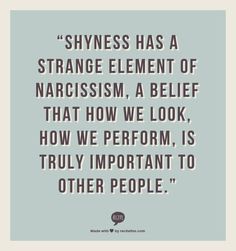
The Shy Little Kitten – A Book Review of Sian Prior’s “Shy: A Memoir”

d3fe758c5e0a51cdd1103793eeb0169c

You’re such a shy boy

You know you should be mine

…All my crushes are about you

                        Adalita, Magic Dirt


“Nooooo”, I found myself silently crying as I hurtled towards the final chapters of the book. I always do this with a great read: lament the inevitable end, the closure of the relationship that has developed between the words and ideas of the author and my own musings/projections. Such was the experience I had in reading Sian Prior’s memoir “Shy”.

Deeply personal, it reveals both a soft belly of vulnerability, with poignant insights into her internal world, as well as a tenacity to understand the complex phenomenon that is shyness/social anxiety through years of personal research. Vulnerability + tenacity = strength. Gives hope. Tick. Perhaps unusually, Prior is not out to proselytise about this or that strategy, therapy, remedy, etc. for “managing” the distress experienced by sufferers. It’s no self-help book. It’s an exposition. What a relief.

In some ways, it’s more a story of love and loss, which is hardly surprising given that social anxiety ultimately expresses fears about intimacy. About the pain of avoiding intimacy with others, about longing for connection, about the anticipatory grief of being seen as flawed by others, about the terror of annihilation of the self that has accompanied past experiences of being humiliated, rejected or abandoned. Mindfulness-based therapist, Steve Flowers, writes that “The experience of shyness involves being exquisitely sensitive to interpersonal peril and seeking to protect yourself from the pain inherent in relationships”. He cites research showing that problematic shyness has core components of private self-consciousness, shame, self-blame and resentment (Henderson, Zimbardo & Carducci, 2001).

Dispelling the popular myth that shyness is akin to introversion, Prior describes herself as a “shy extrovert”, as being locked in a conflict between competing desires to be “seen” and acknowledged versus hidden and safe. This becomes acutely manifest in instances where she is exposed to public attention when out with her (former) famous partner (and yes, we all know who Tom is) and encounters bevies of admirers – his admirers. On the one hand, she is someone, she is half of something; on the other, she is invisible, not even the other, as the gaze settles on him. Perhaps even more painfully, how others see her doesn’t square with how she experiences herself. A dinner companion describes her as sphinx-like, when, engulfed by self-consciousness, a sort of private hell, Prior is doing all she can to prevent herself from melting under the table.

Early on in the book, she tentatively wonders about the connection between her struggle with shyness and the sudden death of her father in a tragic drowning accident. I don’t know where exactly she sees herself on a continuum between being shy and socially anxious in a problematic sense (termed social anxiety disorder or social phobia) and it’s not for me to judge, but if it’s one thing I am certain of, people with social anxiety have been hurt, sometimes over and over again. Shyness is a normal personality trait and up to 50% of individuals apparently describe themselves thus. Whilst it may share some overlapping features with social anxiety, like fear of being negatively evaluated or judged by other people, with associated safety or protective behaviours like wariness or avoidance of certain social or interpersonal interactions, it doesn’t cause the level of distress and disruption to functioning that social anxiety does.

My own hunch is that shyness tips over into social anxiety (and I note that those struggling with social anxiety do not always present with a backstory of shyness) when other factors are present: family breakup or upheaval, an experience of bullying or ostracism, low self-esteem, a disappointment that turns to depression. Signe Dayhoff, social psychologist, recovered social anxiety sufferer and author of Diagonally-Parked in a Parallel Universe: Working Through Social Anxiety, refers to these factors as traumatic conditioning episodes or experiences. From my perspective, early loss of a parental figure who, after all, ran (perhaps heroically, perhaps recklessly) away from his wife and children into the “clutching water” to retrieve two young violinists from the surf (at least, that’s how Prior tries to reconstruct it for herself), no doubt would prime a child for a fearful response to the world and/or intimacy.

I think Prior gets closer to a personal truth when, later in the book, she writes of her suspicion that, as a wee babe of just three months when her father died, she drank in her mother’s grief and trauma at the breast. Family therapists have long described this as the transgenerational transmission of trauma. We don’t just inherit eye colour or IQ, but the emotional baggage of those who have gone before us and, very often, characteristic ways of responding to life’s inevitable difficulties and blows. In a symbiotic and somehow beautiful twist, Prior’s mother is hospitalised for acute migraines following the breakup with Tom. Prior writes, “Has my liquid terror somehow leaked into my mother’s brain and poisoned it”? Her mother’s antennae sensed that her daughter was in deep trouble, that the stakes in her relationship with Tom were high enough that his betrayal of her was in some way a repetition of her original abandonment. Mothers are clever. As are daughters.

Other things I loved about the book:

  • Prior’s understanding of the ghost of self. She tries to capture herself in her image in the mirror, by reconstructing a consistent story of her shyness and perceived deficiencies, but then, phoof, she’s gone. A childhood friend is surprised by her admission of shyness and remembers only the “cool”, competent girl. Tom decides he wants more variety in his life, but what roles had she failed to fulfill? There are so many versions of herself. Shy Sian. Professional Sian. “I contain multitudes. I am a one-woman variety show”.
  • Her description of liquefying, which I think is that experience of annihilation, her sense of herself slipping away, after her breakup with Tom, and the (temporary) relief that swimming brings “Through some strange alchemy of reverse deliquescence”, where her body feels solid again.
  • Her recognition of the addictive nature of anxiety highs, despite the havoc that anxiety has otherwise wreaked on her body, notably her gut, as she has pushed herself off a million small, but scary cliffs, landing victorious.

Still, I am left wondering why Prior, as far as I know, has never chosen to pursue therapy, especially since her mother, Margot, is a psychologist. I wondered the same thing when I read the 2011 feature on Judy Davis in the GoodWeekend (cited by Prior), where, it was reported, she continues to berate herself for her shyness, despite her public successes. Davis said:

 I still haven’t mastered theatre-dressing-room chat, and on film sets I always eat lunch alone, hidden in my trailer. There’s nothing quite as terrifying as joining the film crew and everyone else at the trestle tables in the lunchroom. I would expend 80 per cent of my energy for that day on trying to cope with the social stress of one hour at the lunch tables, feeling awkward and gawky. So I decided decades ago I’d never take on that challenge.

Fascinating. I suspect in the end that Prior, like Davis, has learned to accept her own shyness, even if grudgingly, or at least to accommodate it as just one part of herself. Maybe, like Davis, she learned early on to harness the raw energy of it, transforming it into art, into performance, performing because of it and not in spite of it. I am also left thinking about an idea of Thomas Moore that a completely sanitised, well-adjusted personality (a fantasy, not even therapy can achieve) might also be shallow and uninteresting. I agree that “In therapeutic times like ours”, this idea goes against the grain but it is “ultimately more humane”. Quite often it’s our neurosis that gives us an edge and depth of character, an authenticity, charisma. Certainly, Prior emerges a better character by deciding to look fear in the eye and actually feel her feelings rather than anaesthetise them.

My partner is shy and does audacious things every day. I think I love him because he makes me feel braver about being in the world. My brother-in-law is shy. His blushes are accompanied by a little facial tic…endearing, not treacherous at all. A little visual cue perhaps to go easy on him, be gentle. I can be shy too. My brother-in-law would laugh out loud at the thought of it. I can even hear him chirrup “How ridiculous”!

Lost in Time

DisintegrationofPersistence

It’s Dementia Awareness Month, so I thought this piece I wrote a few months back would be a fitting first blog entry…

My paternal grandmother is turning 96 in the coming weeks and has been in residential care for just over two years now. I can scarcely believe it. I’d never have imagined living to see the day when she went into care. It certainly wasn’t her choice. She’s bloody-minded and independent and doesn’t always play well with other kids. I’m only slightly less astonished that she is hurtling – or should I say wheelie-ing – towards 100. But she is a stubborn buggar, or should I say was.

On my last visit, she was feeling poorly and hadn’t made it past the bed covers. As I held her hands in my cold ones (it always amuses both of us that my hands are perennially chilly…she howls in mock horror with the jolt of them), she suddenly sat forward, looked me dead in the eye, and whispered urgently, conspiratorially, “Listen”… (In the intervening micro-seconds before the rest of her words tumbled out, I could hardly breathe with the anticipation of what she might be about to ask me.) …“Can you tell me if my mother is still alive, because sometimes I forget”. Oh dear, what to say.

The first time she spoke of my great grandmother (still) being alive, I nearly fell off my chair. It was an undeniable, brutal proof of the dementia that was taking hold. She asked me if I had seen her mother and I stumbled around the question thus: “No, have you”? When she lamented that “Mama” hadn’t bothered to visit her once since going into care, I inquired gently, “Do you miss her?”, to which she responded “Yes” (often her lips purse and she’s genuinely unsure). We talked some more about the “get-about” Mama had been and laughed at the audacity of it, with me escaping having to either confirm or deny the “truth” of matters. Later I would marvel with family that she hadn’t done the maths. If she were 95, then Mama would be 115! Another few months down the track, Grandma announced incredulously: “Do you know my mother is over 100”! Ever sharp, both of mind and tongue.

This time, however, I couldn’t wriggle so easily. You see, most days now I’m not even sure if she knows who I am. Let me be precise. She knows me. I call her “Grandma” (clue to being her granddaughter) and she feels me or knows me in an embodied way: I’m familiar, we have an easy rapport and she seems relieved that I’ve come. But she probably wouldn’t know my name (I dare not test her) and if I lined up close family members in front of her, I am confident she wouldn’t be able to tell who was connected to whom. Because the connections are being eroded from use over a long life, bleached by the sun, fading like ghosts. But though she might not be able to reliably recall my name, she has me pinned that I will always tell her the truth (I’m a stickler for the truth, because the alternative is usually infinitely more complex), even when she doesn’t want to hear it. So I gulped and answered honestly, but diffidently: “No, no Mama’s not with us anymore”. This seemed to confirm what she already suspected, as she looked at me, very still. I thought that was the end of the matter, but she pressed on, imploring, “But Bill’s still with us, isn’t he?” Bill was my grandfather, her husband, who died 15 years ago from health complications he’d endured since serving in Papua New Guinea during WWII. At this point the coward in me trumped the pedant and I offered the feeble consolation, “Yes, he is; he’s in our hearts”. Grandma continued to hold my gaze. She knew I’d copped out, but didn’t want to disappoint either of us by digging around for old bones. The conversation moved on.

When Grandma first went into care, great anxieties about dependency and loss of control over her own life, along with a discombobulating sense of dis-ease with her physical and social environment, were soon enough replaced with an almost palpable relief that she no longer had to bear the burden of looking after herself alone. At 90 odd, especially when you live alone with only a dog for constant company, just surviving comes with a certain level of physical and mental strain. Prior to going into care, she talked of being tired often. She had naps most days and still does. Without the burden of self-care, however, there was a noticeable upturn in her health and spirits. She looked brighter, put on a bit of needed weight, seemed happy to be surrounded by peers and the opportunity for a chat here and there. Her memory improved. She repeated herself less frequently and could keep up with current affairs involving the family and the world in general.

But then, this too changed, as the slow realisation dawned that she wasn’t going back home. That she didn’t even have a home anymore because it had been sold. That her current company held up a mirror to her growing infirmity and the slippery slope that is dementia and old age. All paths converge to one point, one end. She became frightened all over again. And with the strain of not having to look after herself gone, she did indeed slip downhill. She no longer needed to fight and keep her wits about her. Other residents were kind enough to let me know that her awareness of forgetting things and people was causing her distress and tears that she dare not show any of us. As Christmas approached, she made plans of baking her Christmas fruitcake, until she remembered she no longer had her own kitchen. Although I offered to do it with her at my place, we both knew she wasn’t up to it. She showed signs of dementia-related paranoia, constantly worried that staff were taking toothpaste from her bathroom. She asked the same questions over and over and over again. Actually I was grateful for the reprieve in having to initiate topics of conversation, struggling to explain and relate events that were fading in meaning and relevance to her. I am amazed at how you get at and around a subject by answering the same question over and over again, building up layers of understanding. Some days I conceded: “I can’t think of anything riveting to report, can you”? And we’d sit in silence, contented that words can’t convey everything anyway.

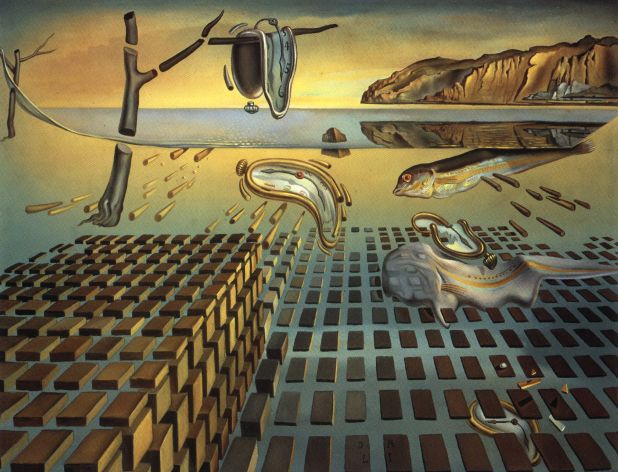
Time started to warp. Instead of being linear, it became circular. The line between reality and fantasy was also blurring. Other things went missing, like favourite cake tins from her (long-gone) kitchen. She had her wheelie up for sale. Like magic, she could shoot down a wormhole and be in Fitzroy, a little girl trying to cross Brunswick Street to see her father in his fruit shop. A repeated theme, she is often too afraid to venture across the busy road and returns, disappointed, her father tantalisingly out of reach. When my parents visit, she often inquires about my mother’s father, gone 10 years, and is mortified that they’ve apparently left the children – my brother and I – at home. When Mum assures her I am at home looking after my own children, sometimes the wires touch and a deduction is made; mostly there’s a quiet confusion. When my daughter visits, Grandma is always fascinated by how much she looks like my Mum! The penny drops, if for a moment. Mostly, she cannot tell me what she’s done five minutes previously and wouldn’t have a clue if she’s been on a morning outing. When she tells me she has been somewhere, her evidence is completely unreliable: Pa’s driven her down the line somewhere for lunch with a car load of ghosts. She also tells me he now supplies the grog for Happy Hour at the residence!

Her mother is omnipresent. There’s a theory that because early memories have been rehearsed more frequently and are therefore etched more deeply into the brain, these are the ones that are often returned to, especially as short-term memory begins to falter. There’s another theory that recall of attachment figures is an attempt to allay anxiety associated with the disorientation of dementia. Mum wonders if Grandma hears her parents calling from beyond, soothing her that life’s journey is coming to an end. She’s not sure Grandma is quite ready for it: She hasn’t made it back to her father. I do think she’s still playing out attachment issues and reveals quite a bit of ambivalence about the way she was mothered in particular. Grandma has been an important attachment figure in my own life, not always benevolent. She lost her brother in the war and the grief has plagued her all her life.  Depression has been a frequent visitor. Hers was not a happy marriage, realising her mistake as she was (literally) about to walk down the aisle, her father resolute that it was too late to change her mind. Her two sons are locked in a war of their own, which started with her playing a game of favourites long ago. A truce seems very unlikely. She’s often been cross with my own father and I’ve challenged and argued with her since I could talk.

I spent a lot of time with my grandmother as a youngster. She taught me to sew – she was a brilliant and fastidious dressmaker and seamstress – and handed on a passion for baking. I know all my cuts of meat. I’ve often sought her counsel over matters of concern, like the time I had a dilemma about whether to attend a pool-party play date, initiated by a dad with unclear motives (promoting a friendship between our respective sons or seeing me in my bathers). She was ninety at the time and knew exactly what to do (politely say “nooooooo”….)! I’ve always been able to talk to her about anything. I understand that small things done for another with care and attention can be gifts of love. Like a beautifully made, well-cut sandwich. Like manicured nails and cuticles. Like a hand-stitched blanket. Like being present and being on time. Porridge with cream and sugar will always elicit rosy memories of childhood. Toasted cheese sandwiches and chocolate cake too. I often think about how the tables have turned in recent years, with the younger generation being more responsible for the older one than vice versa. It seems like I’ve been taking care of Grandma longer than she ever took care of me. I also see it as my duty; it’s my turn to do the nurturing.  Despite her terrible hearing (hearing aids are imperfect at best, rendering telephone calls completely futile), I will never raise my voice, preferring to repeat myself until she understands. Nor will I infantilise her with a condescending (“sweety darling pet”) or sugar-coated tone. I’m clear of my place in the hierarchy and there’s not much that I will go through that she hasn’t already experienced.

Before going into care, we spoke frankly about what I should do if she had another “turn” overnight, possibly a minor heart attack at the time. We agreed that I wouldn’t report the incident to anyone, that she’d lived a good life and that it might be best to just “pop off”. Some days when I see her now, I pray that she will pop off quietly sooner rather than later. It’s not much of a life waiting at the gates. I don’t visit as often as I ought. Winter bugs and other contagious illnesses going through the household can keep me away, but mostly it’s the sadness of seeing her go further and further downhill. I cannot overstate, however, how personally important it has been for me to be brave enough to remain witness to the journey. Where once her anger and disapproval could shake me to the core (I know she told the neighbours when I disappointed her or refused to do as she wished, which was probably often), these days she’s far too frail, and wouldn’t remember anyway, to hold on to a grudge. Fantasies about her power have fallen away. A typical visit now involves me painting her nails (she often opts for the bright pink, although she can’t see it anyway) and the mutual imbibing of chocolate, followed by a hairbrush that lulls her to sleep. I smother her with kisses as I leave and tell her I miss her. It’s tactile and gentle and soothing for both of us. I’ll be devastated when she dies and I’ll always miss her. But I’ll also be okay with it. As she withdraws from the world, any past hurts also recede and a peace washes in about the inevitable. Life, like memory and imagination, is circular.